
HotelTonight: Hotel Deals
HotelTonightTravel & Local
4.317.95K Reviews
- Version
- 26.7.0
- Installs
- 10.00M
- Age Rating
- Everyone
Screenshots

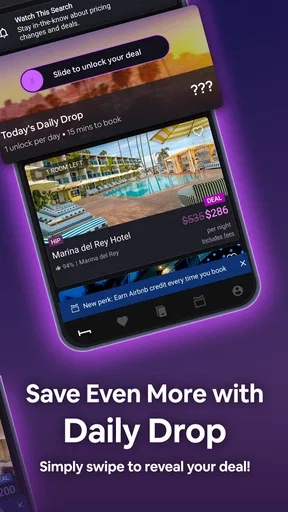
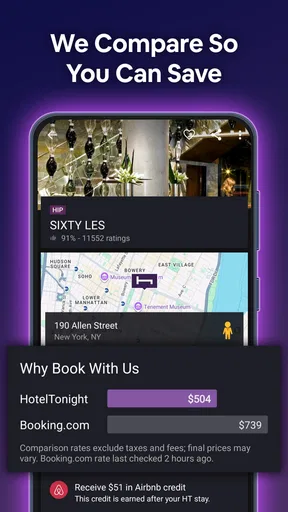
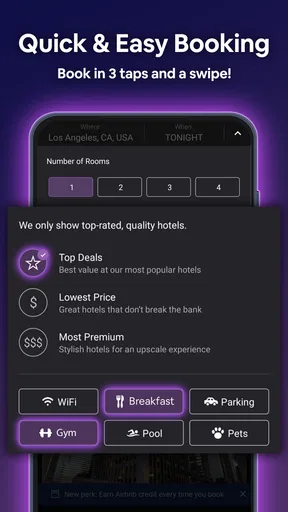

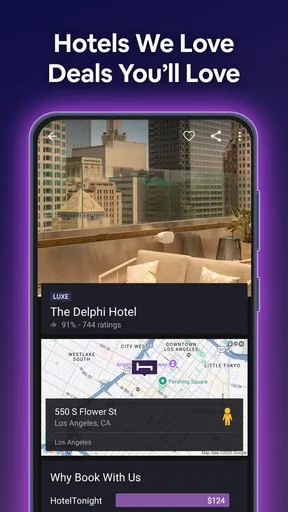
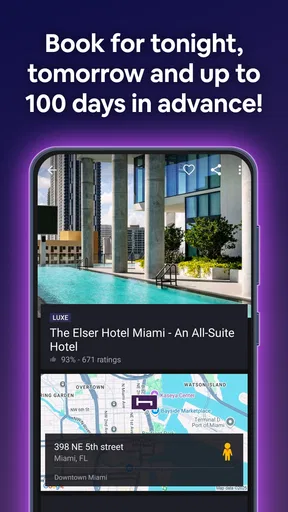
Our Review of HotelTonight: Hotel Deals
 Analysis by Appyee
Booking a room at the last minute is one of those travel problems that sounds simple until you are standing in an unfamiliar city with a nearly empty battery and nowhere confirmed for the night. I have used HotelTonight with that exact kind of urgency in mind, and its appeal is easy to understand: it focuses on hotel stays that are available to book now rather than asking me to plan every detail weeks ahead. That makes it a practical travel and local app, especially for spontaneous trips, delayed journeys, and nights when a normal booking plan has fallen apart.
The app is free to download and use, and it comes from HotelTonight. It has been available since 2011, which gives it a longer track record than many newer travel tools. Its public store presence shows a 4.3 average from around 70 thousand ratings, with over 10 million installs. Those figures do not guarantee that every hotel or every booking will suit me, but they do suggest that this is an established service rather than a small experiment.
What matters most to me, though, is not popularity. A last-minute hotel app handles sensitive moments: I may be sharing a location, entering travel dates, providing guest details, and paying while under pressure. I therefore judge it by how clearly it lets me understand a booking, how much control I retain before confirming, and how easy it is to avoid making a rushed mistake. On that basis, it can be useful, but it rewards a careful reading of the screen rather than blind tapping.
How the last-minute booking experience feels in practice
I find the last-minute booking experience most useful when I treat it as a focused search, not a race to tap the first appealing room. I’ll compare the hotel’s location and booking terms against the reason I’m travelling, then check the final details before committing. That simple pause helps me use the app’s speed without letting urgency make the decision for me.
A focused alternative to broad travel searches
Traditional hotel websites are often built around advance planning. I enter a destination, compare a large number of properties, adjust dates, sort by price, and then work through room types and conditions. That approach is better when I am organizing a family holiday or comparing several neighborhoods. HotelTonight feels different because its central purpose is immediate accommodation. The shorter path is its main strength.
When I open it for an urgent stay, I am not looking for an enormous research project. I want to know which hotels can take me, what the room costs, where the property is, and what I will actually receive. The app is at its best when I already know the city or have a clear reason for staying there. It is less useful when I want to build a detailed itinerary around transport, attractions, apartment kitchens, or a particular room configuration.
This distinction is important. A last-minute hotel specialist should not replace every travel app on my phone. I see it as a focused tool for solving the accommodation part of a trip. I would still use a map, transport app, or broader booking service when the hotel is only one piece of a complicated journey.
The realistic airport-delay scenario
Imagine arriving late after a cancelled connection. I may not have the energy to compare dozens of booking sites, call individual hotels, and wonder whether a room shown online is still available. In that situation, the app’s value is speed and concentration. I can search the area around the airport or city, inspect the available properties, and make a decision without starting a full holiday-planning workflow.
My advice in that situation is to pause for one minute before confirming. I check the map position, the exact dates, the room description, the final amount shown at checkout, and the cancellation or change conditions displayed for that booking. Last-minute urgency makes small mistakes more likely. A hotel that looks close may still require an expensive taxi, while a low headline price may not be the best value once the practical details are considered.
This is one of the less obvious trade-offs: the app can reduce search time, but it cannot remove the need for judgment. The faster the booking feels, the more deliberately I should inspect the final screen.
What the Airbnb credit offer changes
The store summary highlights a current perk: bookings made through the service can provide 10% back in Airbnb credit. That may make the app more attractive to people who use Airbnb as part of their wider travel planning. I would treat it as a bonus rather than the reason to choose a hotel. The hotel’s location, total cost, room suitability, and booking conditions still matter more than a future credit.
There is also a practical question of timing and usefulness. Credit only has value if I expect to use Airbnb later and understand how it is presented and applied during the booking process. I would read the offer details shown inside the app before relying on it as a saving. A reward can influence a decision, but it should not distract from checking the immediate reservation.
Reading the hotel listing like a tired traveler
Hotel listings are easy to skim when I am in a hurry, but the important information is rarely the name alone. I look for the neighborhood, the distance from where I actually need to be, the room type, and any conditions attached to the rate. I also compare the photographs with the written description rather than assuming that every visible feature belongs to the room I am booking.
One useful habit is to decide my non-negotiables before searching. For an overnight airport stop, that might be a realistic transfer route and a private room. For a concert, it might be walking distance and a late arrival plan. For a work trip, a desk or reliable access to the meeting location may matter more than a stylish lobby. This prevents the visual presentation of a listing from taking over the decision.
I also avoid treating a last-minute deal as automatically cheap. A discounted room can still be poor value if it forces a long journey across town or has conditions that do not fit my schedule. The app helps me find available hotels quickly; it does not decide whether the stay makes sense for my particular night.
Trust begins with visible choices
For me, trust in a travel app is built through small, visible decisions. I want to know what I am booking before payment, what information I am entering, and whether the app gives me a clear chance to correct an error. I pay attention to the account screens, booking details, notification choices, and any permission prompts rather than approving everything automatically.
I do not assume that a travel app needs every permission it requests. If a location prompt appears, I consider whether it helps with finding nearby hotels or whether I would rather search by entering a destination myself. If notifications are offered, I decide whether booking reminders and travel updates are useful enough to justify them. These choices are more meaningful than a general feeling that an app is trustworthy.
The same approach applies to account creation and payment. I use the smallest amount of personal information needed to complete the reservation, review the confirmation carefully, and keep the booking details accessible. If I am using a shared or borrowed device, I am especially careful about remaining signed in and about whether confirmation information is visible to the next person.
Permissions and data-sensitive moments
Travel apps often become more data-sensitive at the exact moment I need them most. A location request can be convenient when I am searching nearby, but I prefer to decide whether to grant location access instead of treating it as a requirement. I can then compare the convenience of automatic location detection with the privacy of manually entering a city or address.
Payment is another moment where I slow down. I verify that the destination, dates, guest count, room type, and displayed total are correct before confirming. I also avoid making a booking on an unsecured public connection when I have a realistic alternative. That is not a criticism unique to this app; it is simply sensible behavior whenever I enter travel and payment details.
After booking, I check what information is visible in the confirmation and what communication settings are active. A clear confirmation is valuable because it gives me something to compare with the hotel’s own records if a question arises. If the app presents optional marketing or notification controls, I make an active choice instead of leaving every option enabled by default.
These habits reveal an important limitation: the app can present choices, but I still have to notice them. A rushed interface interaction is risky in any booking service. I would not recommend handing the phone to someone else and asking them to confirm a reservation without personally checking the final details.
Account control matters after the booking
A booking app is not finished when the reservation is made. I need to know where to find the confirmation, how to review the reservation, and what options are available if my plans change. HotelTonight is most useful to me when I treat the account area as part of the booking process rather than an afterthought.
I save or note the essential reservation information before travelling, especially if I expect poor connectivity. I also check the conditions attached to the specific booking instead of assuming that every hotel reservation can be cancelled or changed in the same way. Last-minute inventory often comes with tighter rules, and a flexible plan is only genuinely flexible if the selected rate allows it.
This is where the app may be the wrong choice for some travelers. If I am booking a long, expensive stay far in advance, I may prefer a service with broader accommodation categories, more extensive property research, or a loyalty program that is central to my plans. If I need a guaranteed apartment layout, multiple beds, or a kitchen, a hotel-focused last-minute service may not match my requirements.
Who benefits most from using it
I think the strongest audience is made up of independent travelers who can make quick decisions and are comfortable with hotel stays. It is particularly suitable for an unexpected overnight stop, a spontaneous city break, a same-day work trip, or a traveler who wants to see what is available before committing to a neighborhood.
It can also help someone who has already chosen a destination but has not chosen a property. Instead of opening several hotel websites individually, I can use one focused search to create a shortlist, then inspect the practical details. That workflow saves time without requiring me to accept the first attractive result.
I am less enthusiastic about recommending it as the only planning tool for families with strict requirements. Parents may need adjoining rooms, specific beds, quiet surroundings, or a property with facilities that are not easy to judge from a quick last-minute listing. In those cases, calling the hotel directly or using a broader booking service may provide more certainty.
Comparing it with the usual alternatives
Compared with a general hotel comparison service, HotelTonight feels more decisive and less cluttered when the need is immediate. A broad service is usually better for comparing a wide range of dates, room policies, property types, and advance-booking options. I would choose the broader tool when I have time and several acceptable plans.
Compared with booking directly through a hotel, this app can be more convenient for discovering available properties in one place. Direct booking may be preferable when I already trust a particular hotel, need to ask detailed questions, or want to manage the reservation through that hotel’s own system. The choice depends on whether discovery or direct communication is more important.
Compared with Airbnb, the difference is not simply hotel versus home. Airbnb may suit a longer stay, a kitchen, or a group that needs shared living space. HotelTonight is more natural for a short hotel stay when I want a room without researching an entire property setup. The credit offer may connect the two ecosystems for some users, but it does not erase the practical difference between them.
Small habits that improve the result
- Search by the place you need to reach, not only by the city name. A hotel that looks inexpensive can become a poor choice if it creates a difficult late-night transfer.
- Check the final booking screen twice. I verify dates, guest details, room type, total cost, and the displayed conditions before confirming.
- Use location access deliberately. Automatic nearby results are convenient, but manual destination entry can be better when I am planning ahead or limiting unnecessary access.
- Keep a backup plan for arrival. A last-minute room does not automatically solve late check-in, transport, or reception-hour problems, so I look for the practical arrival information before travelling.
- Consider the reward separately from the room. The Airbnb credit may be useful, but I would never choose an unsuitable hotel just to pursue a future benefit.
These steps turn the app from a panic button into a controlled booking tool. They also reduce the chance that speed, a prominent image, or a reward message will make the decision for me.
Performance, compatibility, and everyday accessibility
The current version is 26.7.0, and the app supports devices running Android 8.0 or later. That makes it accessible to many Android users, although anyone travelling with an older phone should check compatibility before relying on it during a trip. The age rating is Everyone, which fits its role as a mainstream travel service rather than an entertainment app aimed at a particular age group.
Because the service is free, the main cost is not downloading it but the reservation itself and the consequences of choosing the wrong room or rate. I see that as another reason to focus on the booking details rather than assuming that a free app means a risk-free decision. The app removes an access barrier, but it cannot remove hotel-specific conditions.
My cautious verdict for different travelers
I would recommend HotelTonight to a friend who needs a hotel quickly, prefers a streamlined search, and is willing to check the details personally. Its strongest quality is focus: it helps turn an urgent accommodation problem into a manageable shortlist. The established developer, broad adoption, and 4.3 average also make it feel like a service with real staying power.
I would not recommend relying on it without a backup for a complex family booking, a long stay with special room needs, or a reservation where cancellation flexibility is essential. In those situations, more direct communication or a broader travel platform may be worth the extra time. I would also avoid granting permissions or accepting communication choices automatically; visible control is part of using any travel app responsibly.
My final view is positive but deliberate. HotelTonight is most convincing when the problem is “where can I stay tonight?” rather than “how do I plan my entire trip?” Used with a careful checkout routine, sensible location choices, and a realistic look at the hotel’s position and conditions, it can be a genuinely useful companion for spontaneous travel. I would keep it available for those unexpected nights, while still choosing a different approach when certainty, detailed planning, or specialized accommodation matters more than speed.
Verdict
Strengths of HotelTonight: Hotel Deals
- Last-minute bookings can unlock excellent discounts on unsold rooms.
- The app offers a smooth, fast booking process with minimal steps.
- Hotel photos, ratings, and amenities make quick comparisons easy.
- Useful filters help narrow options by price, location, and hotel type.
- Digital booking details are convenient to access while traveling.
Limitations of HotelTonight: Hotel Deals
- Availability may be limited in smaller towns or outside major travel dates.
- Prices can rise sharply during festivals, events, or busy weekends.
- Cancellation and refund rules vary and may be restrictive.
- Some deals provide limited information about the exact room available.
- Taxes, fees, or additional charges may affect the final price.
Similar Picks in This Category
View All
Google Maps
Google LLC3.4

Google Maps Go
Google LLC4.1

Booking.com: Hotels & Travel
Booking.com Hotels & Vacation Rentals4.8

Google Earth
Google LLC3.8

Skyscanner Flights Hotels Cars
Skyscanner Ltd4.8

trivago: Compare hotel prices
trivago N.V.4.4
Frequently Asked Questions
What is HotelTonight: Hotel Deals, and how does it work?
HotelTonight is a mobile booking app designed to help travelers find discounted hotel rooms, particularly for same-day and last-minute stays. After entering a destination and travel dates, you can browse available properties, compare prices, view photos and amenities, and reserve a room directly through the app. Availability and discounts vary by location, date, demand, and hotel participation.
Can I use HotelTonight to book a room in advance, or is it only for last-minute stays?
Although HotelTonight became known for last-minute hotel bookings, it is not limited exclusively to same-day reservations. Many destinations and properties allow users to book several days or weeks ahead, depending on the hotel and the dates selected. However, the strongest savings and largest selection may appear close to the stay date, while advance availability can vary considerably by market.
Are the prices shown in HotelTonight the final prices, including taxes and fees?
Before completing a reservation, HotelTonight generally displays a breakdown of the booking cost, including the room rate and applicable taxes or fees. Travelers should carefully review the final confirmation screen because pricing can differ according to location, currency, local charges, resort fees, cleaning fees, or other property-specific costs. Always check the cancellation and payment details before confirming.
Can I cancel or change a HotelTonight reservation after booking it?
Cancellation and modification rules depend on the specific hotel, rate, and reservation conditions shown during checkout. Some bookings may be flexible, while discounted or same-day rates can be nonrefundable or subject to strict deadlines. Open the reservation details in the app as soon as possible to review the policy, and contact HotelTonight support or the property when the booking terms require assistance.
Is HotelTonight safe and reliable for booking hotels?
HotelTonight is a recognized hotel-booking platform that connects users with participating properties and provides reservation details through the app. As with any travel service, reliability depends on the hotel, local availability, and the accuracy of the information supplied by the property. Before booking, read recent guest reviews, confirm the address and amenities, and save the confirmation and support information for your trip.
